
Search
Latest Blog Posts
-
November 17th, 2017 @ 9:17 am by Kevin
“Hellrazed?” is now available for purchase! -
February 5th, 2014 @ 8:28 am by Kevin
My new documentary is now available for purchase -
January 29th, 2014 @ 8:39 pm by Kevin
Here’s where you can watch my new documentary -
January 29th, 2014 @ 8:35 pm by Kevin
52-minute version of “Hellbound?” now available -
November 21st, 2013 @ 5:18 pm by Kevin
Black Friday DVD sale!
Categories
Archives
- November 2017
- February 2014
- January 2014
- November 2013
- October 2013
- September 2013
- August 2013
- July 2013
- June 2013
- May 2013
- April 2013
- March 2013
- February 2013
- January 2013
- December 2012
- November 2012
- October 2012
- September 2012
- August 2012
- July 2012
- June 2012
- May 2012
- April 2012
- March 2012
- February 2012
- January 2012
- December 2011
- November 2011
-
0March 29th, 2012 @ 4:16 pm by Kevin
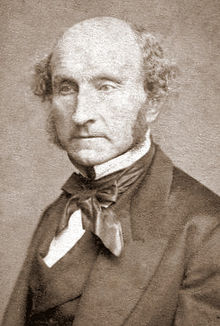 And now for the long(ish) version:
I first encountered British philosopher John Stuart Mill in my Political Science 101 class, where one of my assigned texts was On Liberty. He didn’t mention hell in that book, but he certainly had some harsh words for it in his autobiography.
Like many people today, Mill saw a logical contradiction between a loving God who also “could make a Hell: and who could create countless generations of human beings with the certain foreknowledge that he was creating them for this fate.” When confronted by such an image of God, he asked, “Is there any moral enormity which might not be justified by imitation of such a Deity?”
Seeing as Jesus said, “He who has seen me has seen the father,” and considering that both Jesus and the New Testament writers urge us to imitate Christ, this is a point worth pondering.
Mill continued, “I will call no being good, who is not what I mean when i apply that epithet to my fellow creatures; and if such a being can sentence me to Hell for not so calling him, to Hell I will go.”
Powerful stuff.
By the way, Mill inherited his distaste for hell from his father, who also struggled with the apparent logical contradiction it represents. All of which forced Mill to conclude, “The time, I believe, is drawing near when this dreadful conception of an object of worship will be no longer identified with Christianity; and when all persons, with any sense of moral good and evil, will look upon it with the same indignation with which my father regarded it.”
leave a comment on this post (0 Comments)


